

Skip to content
  • Materials
    • Polycarbonate
      • Hard-coated Polycarbonate
      • Laminated Polycarbonate
      • Optical Polycarbonate Sheet and Film
      • Anti-Static Polycarbonate
      • Anti-fog Polycarbonate
  • Solutions
    • Surface Performance
    • anti-scratch
    • anti-glare
    • anti-reflective
    • anti-fog
    • anti-static
    • weather-resistance
    • Thermoformable Anti-Scratch
    • anti-fingerprint
  • Fabrication
    • Formed Windshields & Windscreens
    • Heavy Equipment Cab Windows
    • Low-Speed Vehicle Windshields
  • Applications
    • Display & Optical Covers
    • Industrial Equipment Windows
    • Consumer Electronics Interfaces
    • Automotive Interior Surfaces
    • Outdoor Display Protection
  • Engineering
    • Quality Proofing
    • Technical Articles
  • About us
  • Contact
  • EN
    • ES

When Should You Rethink the Curing Route for an Anti-Fog Coating?
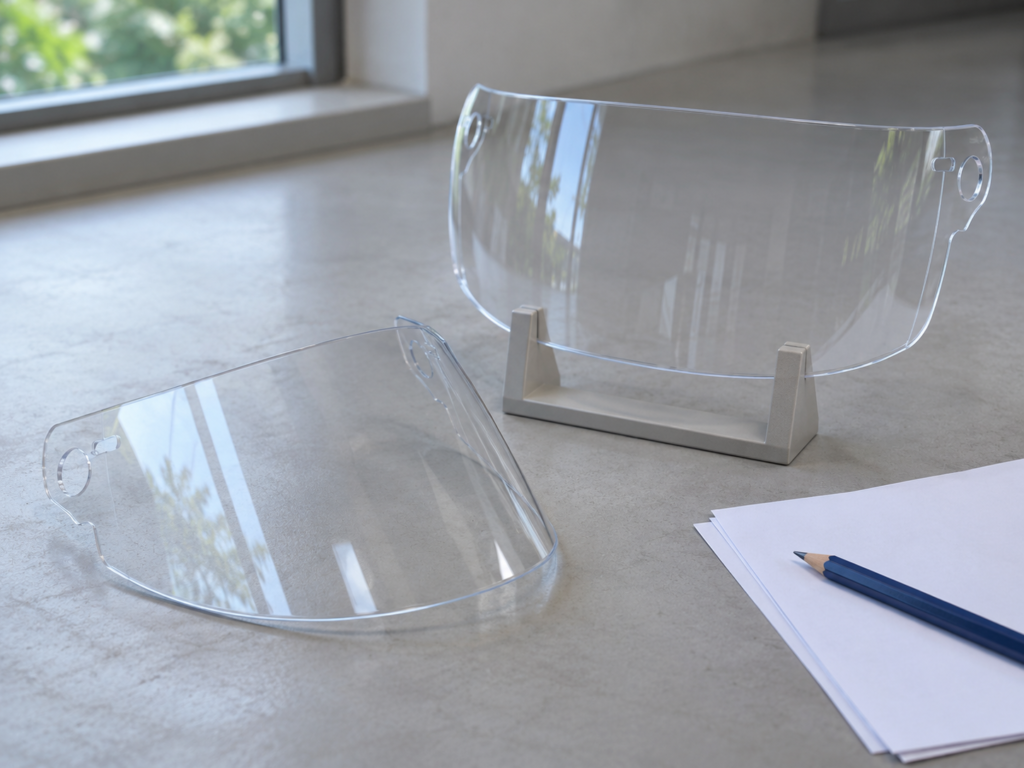
Curved transparent visor samples on a workbench for manufacturing route evaluation

Recurring anti-fog defects, unstable yield or capacity constraints? Review thermal and UV curing against part geometry, total manufacturing cost and production sequence.

How Long Does Anti-Fog Performance Last After Repeated Cleaning?

Concept illustration of an anti-fog transparent lens and cleaning durability

What does a steam test prove, and how do condensation, rinsing and wiping differ? Learn how to define anti-fog durability for a real application.

Why Can Anti-Fog Performance Change After Heating?

Front view of protective goggles showing a fogged area beside a clear viewing area

Why can anti-fog performance change after oven drying or thermoforming? See how PlsTect reviews the pattern and defines the next processing route.

Can Anti-Fog Polycarbonate Be Oven-Dried Before Thermoforming?

Illustrative side-by-side curved visor lenses, with fog on the left and a clear checkerboard view on the right.

Anti-fog polycarbonate needs a process-specific review before oven drying and thermoforming. Assess the substrate, coating system, protective film, geometry and finished-part performance together.

Fabrication and Coating for OEMs

PlsTect supplies plastic, film and glass materials with functional surface treatments and fabrication support for OEM and industrial applications.
From sheets and films to panels, covers, windows and finished components, we help move material requirements toward production-ready parts.

Product Highlights

  • ESD Clean Manufacturing Enclosure
  • Heavy Equipment Cab Windows
  • Motorcycle / UTV / ATV Windshield
  • Machine and Equipment Guards
  • Industrial Display Covers
  • Anti-Glare Glass Screen
  • Anti-fog Insert Lens
  • Ice Rink Barrier

Contact Information

  • Sales
    +86 15651226398
  • Technical Support
    +86 13801503869
  • info@plstect.com
  • Address: No. 206, Laodong West Road, Zhonglou District, Changzhou City, Jiangsu Province,China

Engineering response within 24 hours

© 2026 PlsTect. All Rights Reserved.   Privacy Policy