

Anti-Fog Coating for Windows, Visors and Optical Covers
Anti-fog surface treatments help maintain visibility on transparent parts exposed to humidity, breath, steam, temperature change or recurring condensation.
PlsTect supports anti-fog solutions for polycarbonate, acrylic, films and fabricated transparent parts, with coating selection reviewed together with the substrate, cleaning conditions, fabrication process and final use environment.
When Fogging Matters
Fogging occurs when moisture condenses on a transparent surface and forms droplets that scatter light and reduce visibility.
Anti-fog treatment may be useful when transparent parts are exposed to:
- High humidity
- Rapid temperature changes
- Breath or body heat
- Steam or process moisture
- Repeated condensation cycles
- Enclosed or poorly ventilated environments
The correct solution depends on both the condensation conditions and the requirements of the transparent part.
Available Product Forms
Anti-fog treatment can be considered for different transparent material and component formats.
How Fog Forms
A conventional anti-fog surface is designed to change how condensed moisture behaves on the transparent surface.
Instead of forming many visible droplets, moisture can spread into a more uniform layer, helping reduce light scattering and maintain usable visibility.
Actual performance depends on factors including:
- Substrate
- Coating chemistry
- Surface condition
- Humidity level
- Temperature difference
- Cleaning method
- Frequency and duration of condensation
Anti-fog performance should therefore be evaluated according to the real application rather than by coating name alone.
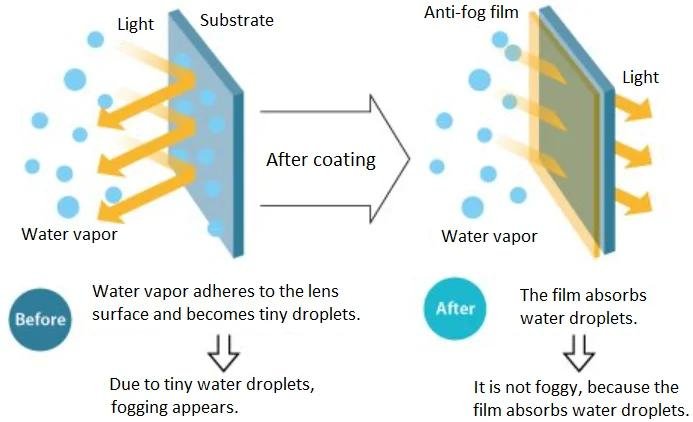
How Anti-Fog Surface Treatment Works
Condensation cannot be avoided — only controlled.
Not every fogging problem should be solved in the same way. Anti-fog performance may depend on surface behavior, and the most suitable direction often depends on visibility goals, moisture conditions, maintenance expectations, and overall product requirements.
Hydrophobic surfaces are useful when water repellency, droplet mobility, splash behavior, or easier cleaning matters. However, for continuous fogging caused by sustained humidity or breath condensation, hydrophilic or moisture-managing anti-fog routes are usually more relevant.
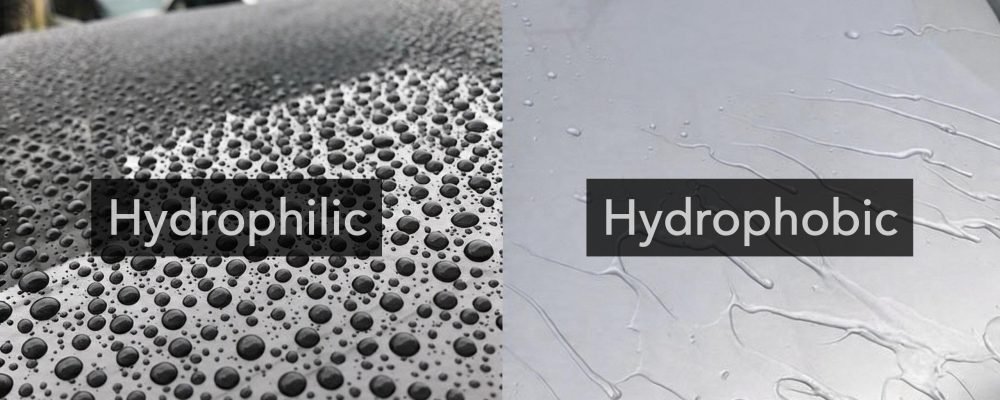
Hydrophilic
Anti-Fog
Hydrophobic
Anti Fog
Mechanism
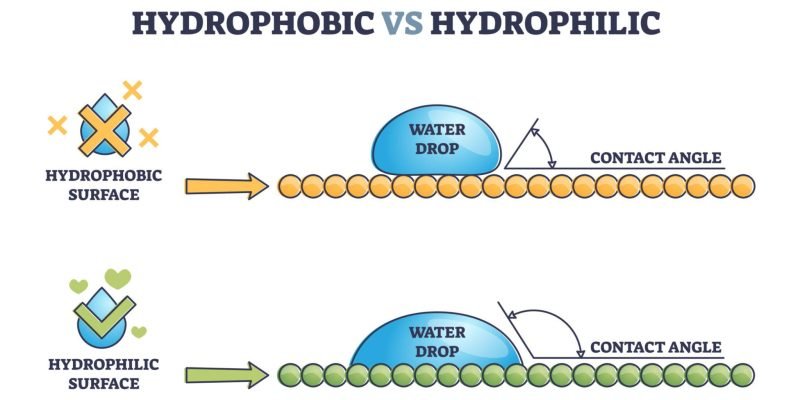
Hydrophilic anti-fog surfaces help moisture spread into a more continuous, even layer of water rather than forming discrete droplets. This can reduce droplet-based light scattering and support more continuous visibility through the surface.
Mechanism
In some projects, the surface goal is not only fog prevention, but also how water, dirt, or contamination behaves on the surface. A hydrophobic-oriented route may be relevant when water repellency, droplet mobility, easy-clean behavior, or outdoor exposure also matter.
Considered for
- user-facing transparent surfaces
- visors and face shields
- windows, covers, and mirrors
- applications with repeated condensation or humidity exposure
Considered for
- splash-prone environments
- outdoor-facing surfaces
- applications where maintenance and surface cleanliness also matter
- products where water interaction is part of the broader performance target
Key Focus
- continuous visibility
- reduced visible droplet formation
- condensation-related viewing stability
Key Focus
- broader moisture behavior
- water repellency-oriented surface response
- cleaning and contamination-related considerations
*The more suitable route depends on whether the priority is continuous visibility under condensation, or a broader surface behavior strategy involving water interaction, maintenance, and environmental exposure.
Why Anti-Fog Fails
Anti-fog performance may appear simple under controlled conditions.
In practical applications, however, long-term clarity is influenced by contamination, surface wear, and repeated environmental exposure.
Contamination
Oil mist, coolant residue, dust, and process particles can alter surface behavior and disrupt uniform water spreading.
This often leads to uneven fog formation and localized visibility loss.
Surface Wear
Repeated cleaning, wiping, abrasion, or contact with tools can gradually damage the functional surface.
Once the surface becomes uneven or worn, anti-fog performance may become less stable over time.
Performance Drift
Temperature changes, humidity cycles, chemical exposure, and long-term use can affect how the coating responds to moisture.
This is why anti-fog selection should consider the real working environment, not only short-term test conditions.
*The challenge is not only preventing fog, but preserving visibility under real operating conditions.
Choose the Right Route
Not every anti fog challenge requires the same solution path. A better-fit route depends on how fog forms, what the surface needs to remain visible for, and whether other priorities such as scratch resistance, easy-clean behavior, optics, or fabrication compatibility also need to be considered.
This is why route selection is often more important than simply specifying “anti fog” as a single function.
Continuous Visibility
- Environment: High humidity / enclosed systems
- Risk: Visibility loss = safety issue
- Recommended: Hydrophilic anti-fog
Mixed Exposure
- Environment: Occasional condensation + contamination
- Risk: Both fog and dirt
- Recommended: Hybrid / engineered surface
Water Repellency
- Environment: Outdoor / splash
- Risk: Water accumulation
- Recommended: Hydrophobic-oriented
Where PlsTect Anti-Fog Is Used
Anti-fog coated products are used where transparent surfaces must remain readable, inspectable, or visually functional under condensation-prone conditions.
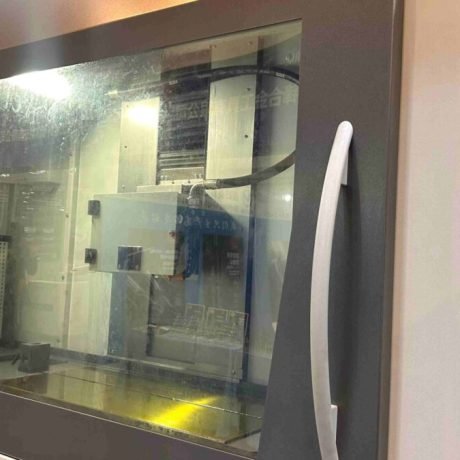
Industrial Equipment Windows
Anti-fog machine windows and equipment viewing panels support clearer operator observation in enclosed, humid, or frequently cleaned production environments.
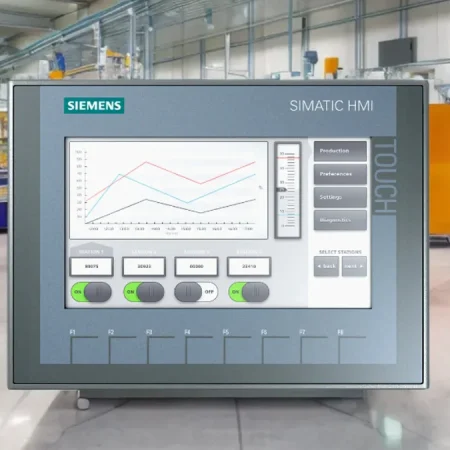
Display Covers and HMI Panels
Anti-fog display covers and HMI panels help maintain readability when moisture or temperature gradients affect the viewing surface.
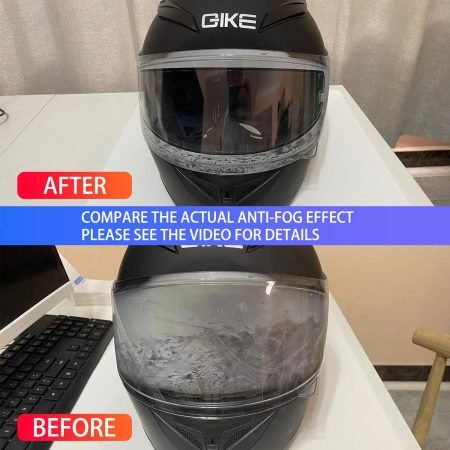
Helmet Visors and Protective Face Shields
Anti-fog helmet visors, face shields, and PPE visors help reduce visibility loss caused by breath, humidity, or temperature differences during use.
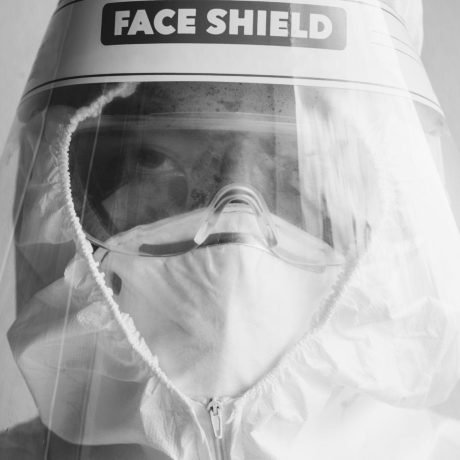
Medical Face Shields and Device Panels
Anti-fog surfaces can support clearer visibility on face shields, device covers, and high-touch transparent panels where breath, cleaning, or indoor temperature differences may cause fogging.
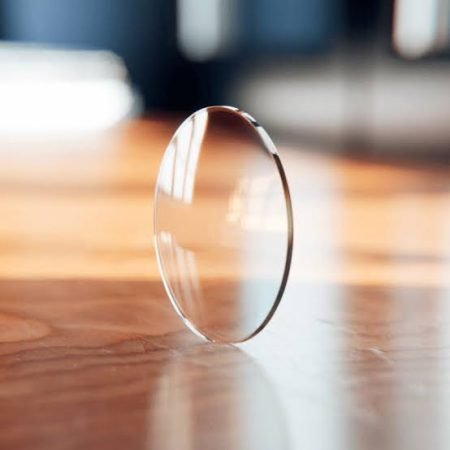
Optical Covers & Lenses
For optical covers, protective lenses, camera windows, inspection covers, and transparent cover parts where condensation may interfere with visibility, monitoring, or light transmission.
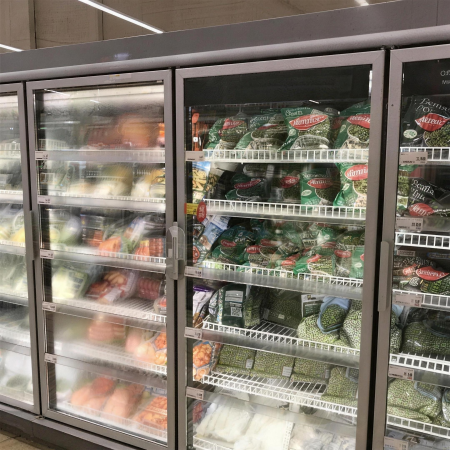
Refrigerated and Humid Display Areas
Anti-fog films or coated covers may be considered for beverage showcases, refrigerated displays, and other humid viewing environments where condensation affects product visibility.
Fabrication Review for Anti-Fog Coated Parts
Not every anti-fog coating route is suitable for the same fabrication sequence. For formed, bent, printed, laminated, or assembled parts, PlsTect reviews the substrate, coating side, geometry, handling method, and final use conditions before confirming the process route.
Many coated materials need further fabrication before they can become usable panels, covers, windows, or interface surfaces.
PlsTect reviews fabrication needs together with coating function, material type, product geometry, and final application conditions. This helps reduce the risk that a coated surface works well as a sheet, but becomes difficult to process, assemble, clean, or use in the final part.
CNC Cutting and Milling
For coated panels, covers, windows, and custom parts that require accurate dimensions, openings, slots, or mounting features.
Hot Bending and Forming
For applications where the coated material needs to follow a curved, angled, or formed product structure.
Printing and Masking
For display covers, control panels, interface surfaces, decorative borders, logos, or protected visual areas.
Bonding and Lamination
For parts that require layered structures, film combinations, adhesive bonding, or assembled surface systems.
Edge Finishing
For panels, covers, and windows where edge quality, handling safety, appearance, or dimensional control matters.
Handling and Assembly Protection
For coated surfaces that need protection during fabrication, packaging, transport, installation, or final product assembly.
Cleaning and Long-Term Use
For parts that will be touched, wiped, cleaned, exposed, or repeatedly handled after fabrication.
Typical Applications
PlsTect anti-fog performance is required across different environments where condensation affects visibility.
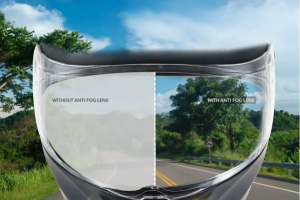
Helmet visors can fog when breathing, humidity, or temperature changes affect the inner surface.
Anti-fog coating helps maintain clearer forward visibility during use.
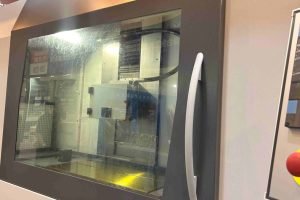
Industrial windows may face humidity, cleaning, temperature variation, or enclosed equipment conditions.
Anti-fog surfaces help keep viewing areas readable for operators and inspection tasks.

Medical face shields are often used in close-contact environments where breathing and temperature difference can cause fogging.
Anti-fog coating supports clearer visibility while keeping the shield surface easier to use.
Optical covers need stable clarity when they protect displays, sensors, or viewing surfaces.
Anti-fog treatment helps reduce condensation that may interfere with visibility or optical performance.
Project Development Workflow
From concept definition to mass production implementation.
A structured engineering workflow ensures efficient development, performance validation, and reliable production implementation.
Requirements
Specifications and performance targets
Selection
Coating system definition
Sampling
Sample preparation for evaluation
Validation
Performance testing and confirmation
Pilot Study
Process stability verification
Production
Mass manufacturing implementation
* Early-stage technical communication significantly reduces development risk and timeline.
Related Supports
Surface Solutions Page
Use When You Need
Better surface durability and cleaning resistance
Reduced dust attraction and static build-up
Lower visual discomfort under strong lighting
Reduced reflection and improved viewing clarity
Better stability for outdoor or semi-outdoor exposure
Supporting Page
Issues We do Help
Match surface functions with real product and operating requirements.
Help with material matching, processing review, and sample discussion
Information about validation, testing, process control, and repeatability
Send drawings, samples, surface problems, or project requirements
Frequently Asked Questions
Find answers to common questions about anti fog coating, application fit, and project evaluation.
Can anti-fog coating be applied to polycarbonate or acrylic sheets?
Yes. Anti-fog performance can be engineered on polycarbonate, acrylic, and selected plastic films depending on the substrate, coating route, optical requirements, and final application conditions.
Can anti-fog coating be used for helmet visors and face shields?
Yes. Anti-fog coating is commonly considered for helmet visors, face shields, safety visors, and protective shields where breath, humidity, or temperature differences may cause visibility loss. The coating side, cleaning method, and wear exposure should be reviewed before production.
Is hydrophobic coating the same as anti-fog coating?
Not exactly. Hydrophobic surfaces help water bead or move away from the surface. For continuous condensation or breath-related fogging, hydrophilic or moisture-managing anti-fog routes are often more suitable.
Can anti-fog be combined with scratch resistance?
Yes, but the coating structure must be selected carefully. In many industrial parts, anti-fog performance needs to be considered together with abrasion resistance, cleaning resistance, handling, and optical clarity.
Can anti-fog coated sheets be CNC cut or fabricated?
In many cases, yes. Cutting, milling, printing, masking, bonding, or assembly should be reviewed together with coating side, protective film, edge quality, and handling requirements.
Can anti-fog coated parts be bent or formed?
It depends on the coating route, material, forming temperature, radius, and deformation area. Forming should not be assumed without sample testing or process review.
Why does anti-fog performance become unstable after use?
Contamination, oil mist, coolant residue, dust, repeated wiping, aggressive cleaning, and surface wear can change how moisture behaves on the surface. This is why anti-fog performance should be evaluated under real-use conditions.
Contamination, oil mist, coolant residue, dust, repeated wiping, aggressive cleaning, and surface wear can change how moisture behaves on the surface. This is why anti-fog performance should be evaluated under real-use conditions.
Start Your Project Review
Share your performance requirements, typically we will respond with recommendations.