

In this guide
Introduction
Transparent parts used in industrial equipment, transportation systems, displays, and protective structures often require both mechanical durability and long-term optical performance.
For these applications, abrasion resistance is not only about preventing visible scratches. Surface wear can also affect transparency, light transmission, and visual clarity.
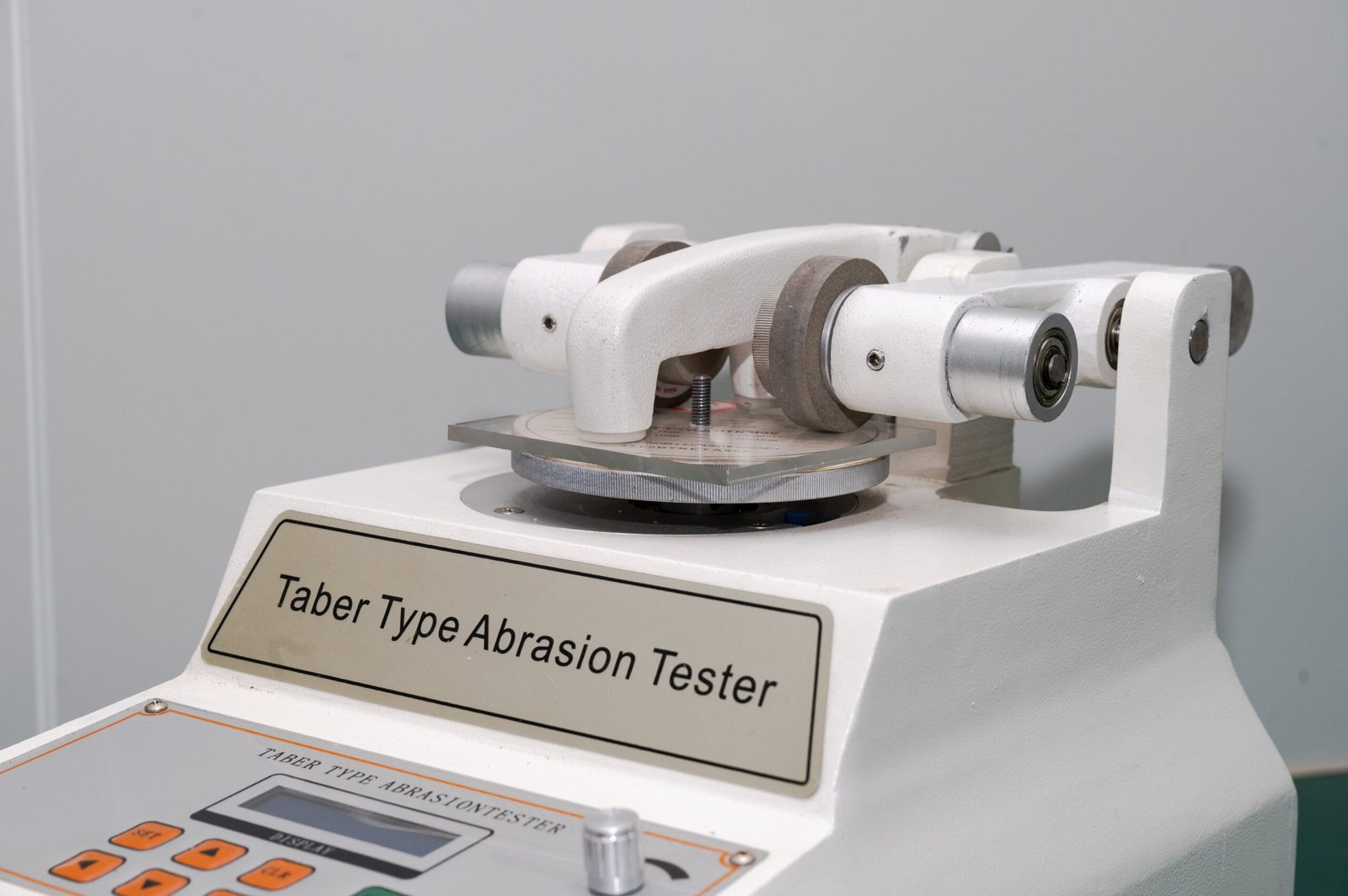
ASTM D1044 Taber Abrasion Test, also referred to as the Anti scratch test, is commonly referenced to evaluate the abrasion resistance of transparent plastics and coated transparent components.
Understanding how to interpret ASTM D1044 results helps engineers compare different materials, coatings, and surface treatment solutions more effectively.
What Is ASTM D1044 Taber Abrasion Test?
ASTM D1044 is a standardized abrasion testing method used to evaluate the resistance of transparent plastics to surface wear.
During the test, a specimen is subjected to controlled abrasion using specified test conditions. The optical change after abrasion is then evaluated.
For transparent parts, the most important measurement is usually:
Haze change (ΔHaze)
because increased haze indicates greater light scattering caused by surface damage.
Why Haze Change Matters for Transparent Components
For opaque materials, abrasion may mainly affect appearance.
However, for transparent components, abrasion can directly influence functional performance.
Surface wear may result in:
- Reduced visibility
- Increased optical distortion
- Lower light transmission
- Poor user experience
- Shortened service life
Therefore, abrasion evaluation for transparent parts should focus not only on surface hardness but also on optical retention after wear exposure.
Key Parameters When Comparing ASTM D1044 Results
ASTM D1044 results should always be reviewed together with test conditions.
Different test parameters may significantly influence the final result.
| Parameter | Why It Matters |
|---|---|
| Abrasion cycles | Represents the severity of wear exposure |
| Applied load | Influences abrasion intensity |
| Abrasive wheel type | Determines the aggressiveness of the test |
| Initial haze | Establishes the optical baseline |
| Final haze | Shows optical degradation after testing |
| ΔHaze | Indicates abrasion-related optical change |
ASTM D1044 Results Should Be Compared Under the Same Conditions
A lower haze change value generally indicates better abrasion resistance.
However, ASTM D1044 results should not be compared without checking:
- Test cycle number
- Load condition
- Abrasive wheel specification
- Material thickness
- Surface treatment condition
- Optical measurement method
A coated polycarbonate sheet tested under one condition may not be directly comparable with an uncoated plastic sheet tested under another condition.

ASTM D1044 vs Other Surface Durability Tests
Different tests evaluate different aspects of surface performance.
| Test Method | Main Evaluation | Typical Application |
|---|---|---|
| ASTM D1044 Taber Abrasion | Abrasion resistance and optical change | Transparent panels and coated plastics |
| ASTM D3363 Pencil Hardness | Surface hardness | Coating hardness evaluation |
| Steel Wool Test | Scratch resistance | Surface durability comparison |
| Weathering Test | Environmental durability | Outdoor exposure performance |
A higher pencil hardness rating does not always represent better abrasion performance.
For transparent engineering parts, abrasion resistance should be evaluated together with optical performance.
The Role of Hard Coatings on Polycarbonate
Polycarbonate provides excellent impact resistance, lightweight advantages, and optical transparency.
However, standard polycarbonate surfaces may require additional protection when exposed to repeated friction or cleaning cycles.
Hard coating technologies can improve:
- Surface durability
- Scratch resistance
- Optical retention
- Long-term appearance
For applications requiring both impact protection and abrasion resistance, hard-coated polycarbonate is often evaluated through abrasion testing such as ASTM D1044.
Applications Requiring Abrasion Performance Evaluation
ASTM D1044 testing is especially relevant for transparent components used in demanding environments, including:
- Industrial equipment windows
- Machine protection panels
- Vehicle windshields and windscreens
- Display protection covers
- Outdoor transparent components
- Safety observation windows
In these applications, maintaining optical clarity after long-term use is often as important as initial transparency.
How to Select the Right Abrasion-Resistant Transparent Material
Material selection should consider multiple factors:
- Required optical performance
- Impact protection requirements
- Surface durability expectations
- Environmental exposure
- Cleaning frequency
- Fabrication requirements
A complete engineering evaluation should consider both material properties and final component conditions.
Choosing a Hard Coating for Your Part?
Tell us what the part is used for and what kind of wear it sees. PlsTect can help you narrow down coating options and identify what to verify on a sample.
Discuss Your Application