

Technical Articles · Anti-Fog Polycarbonate
A change after oven drying or thermoforming needs a closer review of the material, process and finished part. PlsTect uses the observed pattern to define the next processing route.
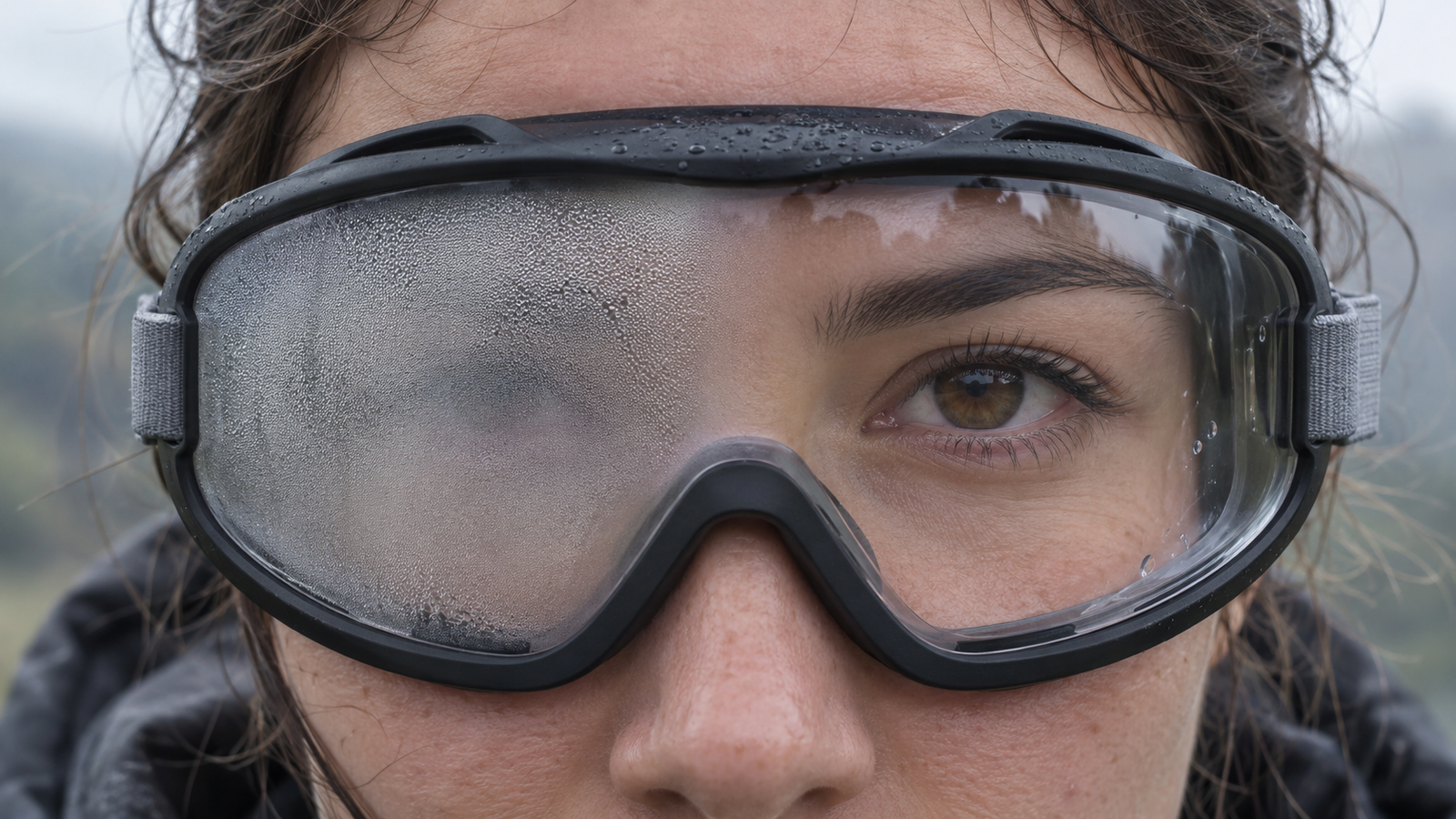
An anti-fog PC sheet can perform normally as a flat sample and show a different result after oven drying, hot bending or thermoforming.
The visible change does not identify the cause on its own. Heating affects the complete material construction: the PC substrate, the anti-fog surface, any function on the opposite side and the protective masking. Forming adds stretching, local thinning, mould contact and cooling into a new geometry.
As discussed in Can Anti-Fog Polycarbonate Be Oven-Dried Before Thermoforming?, coated-sheet selection and the process that follows cannot be treated as separate decisions. Once a change has appeared, the useful question is not simply whether the coating has “passed” or “failed.” It is what changed, where it changed and at what stage the sample was checked.
The same visible result can arise from different parts of the process. Looking at the pattern first helps avoid rejecting a workable route for the wrong reason—or accepting an unsuitable route because the original flat sample looked clear.
If the whole surface behaves differently, the review starts with factors shared by the entire sheet: the heating sequence, the condition of the coating construction, the masking and the timing of the check. A surface that clears more slowly, wets differently or appears temporarily uneven immediately after heating does not provide enough information by itself to identify a permanent coating problem.
If the change appears mainly around a tight radius, deep section, edge or visibly thinned area, local forming demand becomes more relevant. The main flat or gently curved area may continue to perform normally while the most heavily deformed region behaves differently. In that case, a flat coupon has confirmed the initial coating condition, but it has not represented the part of the component that places the greatest demand on the material.
If the result is patchy or accompanied by marks, haze or irregular wetting, the review also considers protective film, mould contact, cleaning residue and handling. A contact or residue pattern can make a surface appear to have lost anti-fog performance even when the change is not uniform across the coating. The shape and location of the affected area often provide more useful direction than repeating the same fogging demonstration on another flat sample.
If fog resistance remains but viewing quality changes, the issue is no longer only anti-fog performance. Haze, surface waviness, visible distortion or contact marks can still make a visor, instrument cover or equipment window unsuitable for its intended use. A transparent component has to retain the required optical and surface condition as well as its anti-fog response.
The location of the change does not provide a complete failure diagnosis. It does, however, separate an overall material or heat-history question from a local forming question and from a contact or contamination issue.
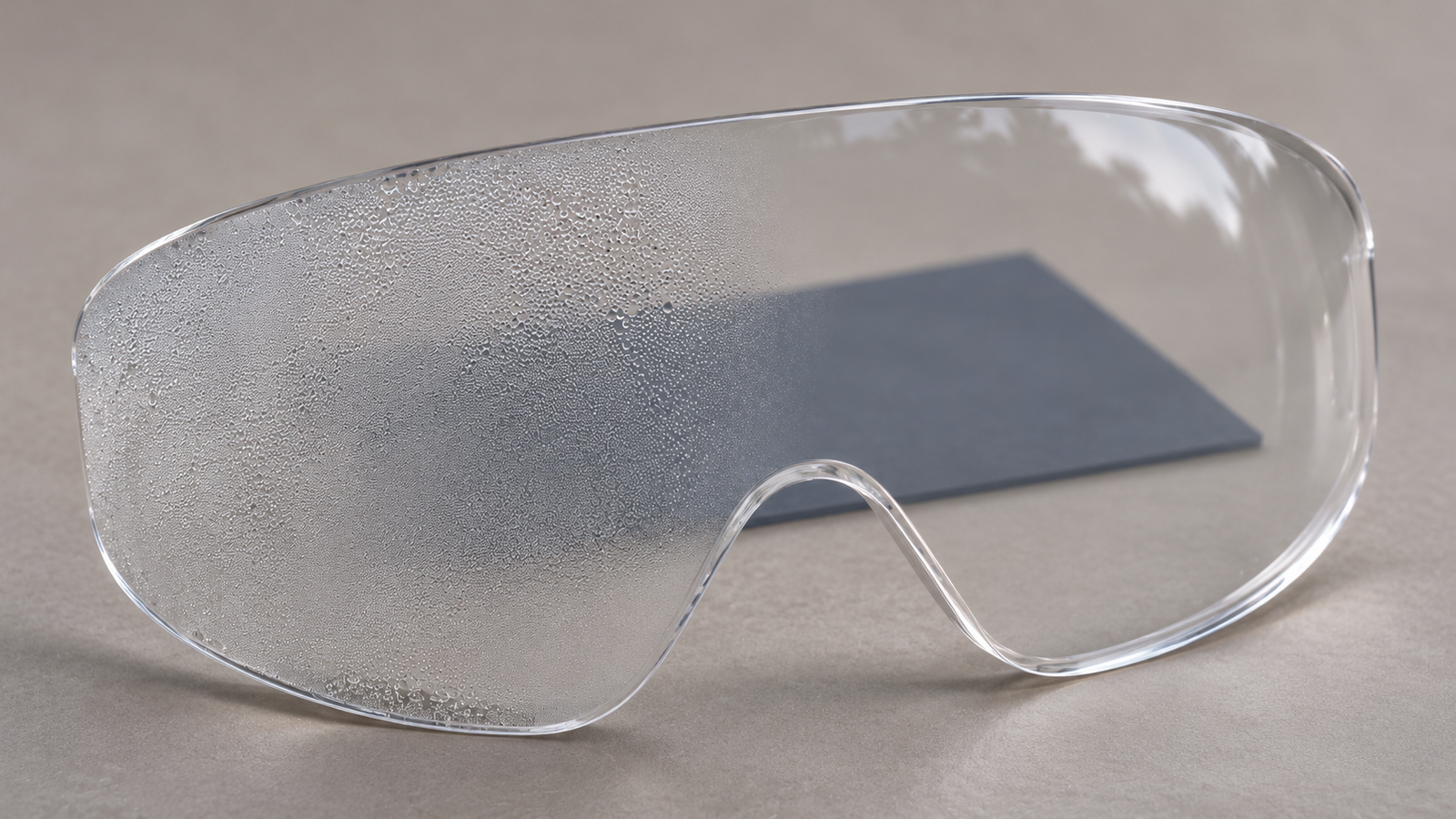
A steam demonstration remains a useful practical check, but its meaning depends on the condition of the sample at that moment.
A result recorded immediately after an oven cycle, after the part has cooled, after forming or after a defined conditioning interval may not describe exactly the same surface state. This does not mean that every weaker result will recover, and it does not mean that a visible change should be dismissed as temporary. It means that the test timing must be clear before the result is used to approve or reject the production route.
The comparison should reflect the actual project rather than a fixed laboratory programme applied to every part. For one project, the relevant comparison may be the same material before and after the planned heating cycle. For another, the important comparison may be between a low-deformation viewing area and a more highly formed region of the finished component.
A continuous video can document the exposure and the follow-up surface check in one sequence. The value comes from knowing which sample is being observed, what process it has experienced and which part of the component is being reviewed—not from breaking the same practical check into multiple isolated demonstrations.
The customer is not purchasing a flat fogging result. The customer is purchasing a part that has to remain usable after heating, forming, trimming, handling and assembly.
For this reason, the representative sample should reproduce the features that matter to the final application. A small flat coupon may be sufficient to screen the initial coating response, but it cannot represent a tight curve, a locally thinned section, a mould-contact area or an optical viewing zone.
The required checks depend on the part. They may include anti-fog response before and after processing, the appearance of the coating, haze or transparency, and the condition of areas exposed to greater deformation. Where the application involves cleaning, water exposure or repeated wiping, those conditions can be reviewed separately rather than assumed from the initial steam result.
The same principle applies to a two-sided construction. An inner anti-fog surface and an outer hard-coated or other functional surface pass through the same heating and forming sequence. The finished part is acceptable only when the complete construction remains suitable for the intended use.
PlsTect starts with the actual component: the anti-fog polycarbonate construction, the heating and forming sequence, the location of the observed change and the quality required in the finished part.
The result may support keeping the current pre-coated route and confirming it on more representative geometry. It may indicate that masking, contact, handling or another process step needs to be reviewed before the coating itself is changed. For a part with concentrated deformation or demanding optical areas, it may point toward applying the anti-fog coating after forming or supplying a finished coated component.
Not every change requires a new coating. Not every weaker result should be accepted as temporary. The purpose of the review is to define a controlled next step rather than force every observation into the same explanation.
For the customer, that means a clearer production decision: whether the current route can continue, what the representative sample needs to reproduce, which finished-part properties should be checked and what change in material, geometry or process would require another review.
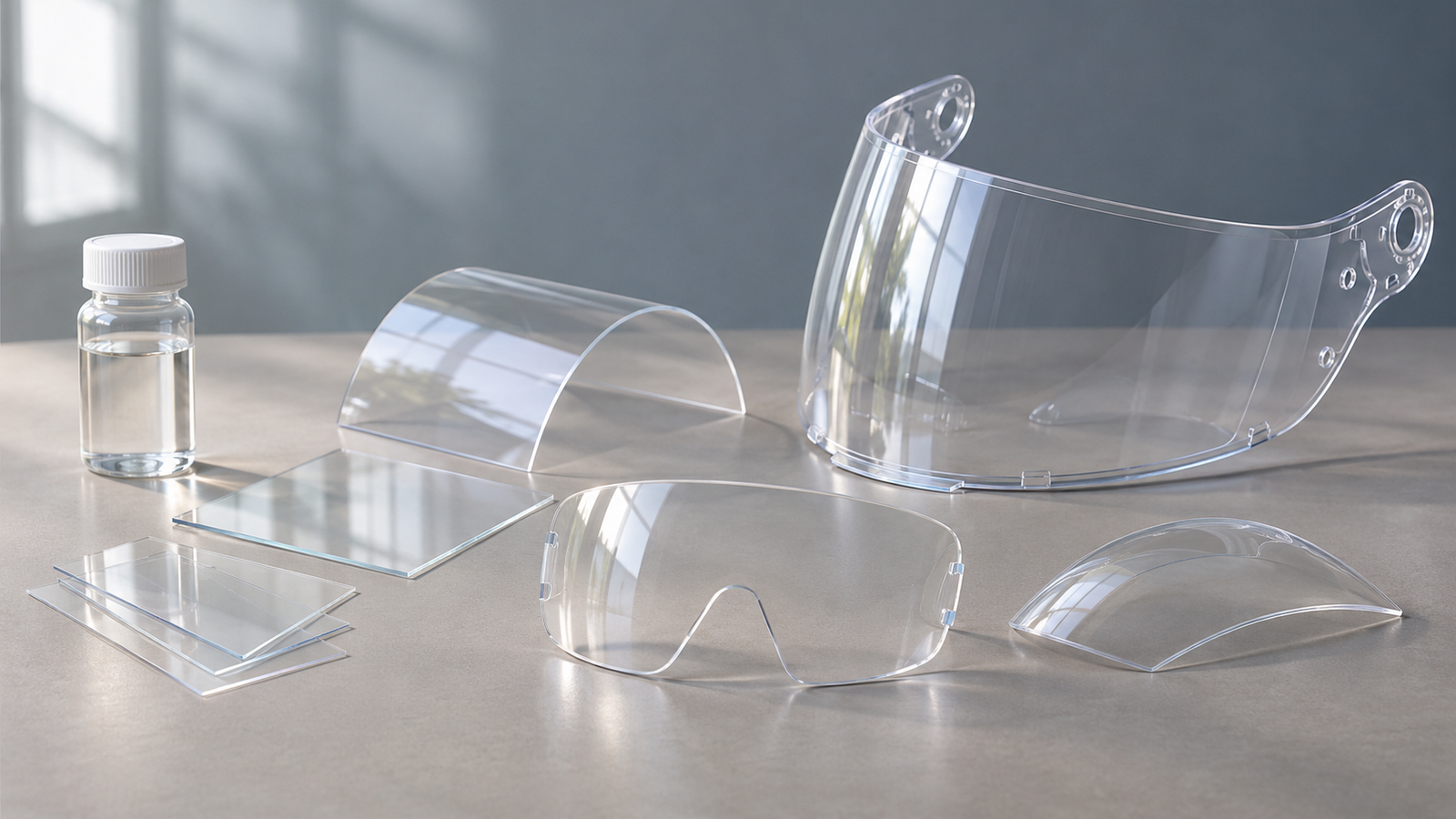
This approach turns an observed change into a defined material, process and supply-route decision. It follows the same application-based logic used in PlsTect’s quality validation approach: identify the condition that matters to the final part, review it on representative geometry and state clearly what the result has—and has not—confirmed.
Share the material construction, part geometry, heating or forming sequence, and a photograph or video showing the affected area.
PlsTect will review the likely processing route, the representative sample required and the checks needed before production.
PlsTect supplies plastic, film and glass materials with functional surface treatments and fabrication support for OEM and industrial applications.
From sheets and films to panels, covers, windows and finished components, we help move material requirements toward production-ready parts.
Engineering response within 24 hours
© 2026 PlsTect. All Rights Reserved. Privacy Policy